���������������������������������������������
CCG持续关注国际关系议题,推动中国与全球化的发展,积极开展国际交流,充分发挥智库“二轨外交”作用,在巴黎和平论坛、达沃斯世界经济论坛、慕尼黑安全会议等重要国际政策与意见交流平台上组织分论坛、边会、圆桌会议、晚宴等活动,促进国际政商学界对话,凝聚共识;CCG积极与各国政界、智库界、工商界开展“二轨外交”活动,每年常态化赴多国调研与交流,促进中外关系攸关方互动,保持与多国政策圈层的沟通渠道。
-
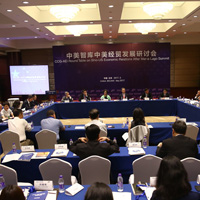
【人民网】中美专家点评特朗普新政 组建执政班底困难重重
人民网北京5月19日电 (记者 贾文婷)CCG-AEI中美经贸发展研讨会18日在北京举行。研讨会上,中美专家深入探讨了“习特会”及特朗普执政百日后中美经贸现状和未来方向,研判中美经贸的机遇和挑战,共同为决策制定提供参考。此外,午餐会时间,AEI高级研究员彼得·沃里森就特朗普与里根两任总统的对华政策比较等内容进行演讲。CCG联席主席何亚非则通过自己的外交官经历,介绍了中国外交政策在改革开放以来的新变化。 在“特朗普执政回顾”分论坛上,AEI高级研究员卡琳·鲍曼女士指出,几周前,美国刚刚迎来了特朗普上台100天。对于特朗普来说,百日执政充满了问题。多数调研结果都说明,现在特朗普民调的支持率是1945年以来历届总统中最低,在最近的一次民调当中,他的支持率是43%,52%的人认为其工作做得非常糟糕,“混乱”也是特朗普政府的一个关键词。 卡琳·鲍曼称,在经济方面大家对于特朗普的做法还是相对满意。很多人认为特朗普可以创造就业,75%的美国人都赞扬他让就业回归美国的做法。特朗普政策的重点就是要在美国国内创造更多的就业、促进经济增长。有人认为特朗普其实是很聪明的,他非常关注大家的需求,可以给华盛顿带来改变。 卡琳·鲍曼指出,在100天的执政期间,我们看到了特朗普的一些优点,但还是有非常多的问题。 CCG顾问、原中联部副部长于洪君认为,“特朗普现象应运而生,但这并不等于美国已经时来运转。”特朗普入主白宫,成为美国总统,引起了全社会的忧虑。但是现在看来完全反了,“特朗普现象”看似偶然,实为必然。200多年来,美国形成的体制相对稳定,是一大优势,甚至成了世界上很多国家效仿的榜样。但是时代在发展,社会在进步,人们的思维也都在变化。美国这几百年进程中取得了巨大成功,也积累了很多矛盾和问题,这个制度弊端显而易见。 对传统政治和传统政客的普遍失望,甚至可以说是高度厌恶,导致以社会下层为主的普遍选民把选票投向了没有从政经验的地产大亨。 “特朗普现象”也是美国社会发展到特定历史阶段的一个产物。 美国制度是刚性的,所以特朗普受到多方面的制约。“百日新政”的冲击波应该说是势头受挫。实际上是遭遇了系列的滑铁卢,首先是几个“限穆令”,都变成了一张张废纸。折中、妥协、退让,但是最终也没有得到很好执行。 “百日新政”不会那么荒诞诡异,全世界对特朗普慢慢适应了,国际社会应该说从最初的迷茫中逐渐地摆脱出来。 美国社会并没有把美国变革求新的希望寄托一个人身上。他可能给美国社会带来的是更深层次的分裂和对抗。各大主流媒体又推波助澜,现在要弹劾他的呼声越来越高。特朗普跟媒体的关系,实际上一直是激烈的对抗状态,把媒体称为“人民公敌”。这对于他进一步树立一个良好的形象,或者改善自己的处境非常不利。 于洪君指出,整个国际社会对美国现在成为逆全球化的推手深感不满。经济政策保守主义色彩太浓。美国和其他国家毕竟不同,长期以来对整个国际做出了巨大的贡献。特朗普在考虑本国发展的时候,必须考虑整个人类社会的共同发展,在谋划自己利益的时候,必须兼顾各个国家的利益。 AEI研究员钟伟锋、CCG学术委员会专家时殷弘、CCG特邀高级研究员吕祥等多位专家学者也就上述话题发表意见,与会者普遍认为,特朗普百日执政充满不确定因素,未来执政班底的组建困难重重。文章选自人民网,2017年5月19日
2017年5月22日 -
Wang Huiyao:Belt and Road needs global partners
China needs to take steps to enlist others and emphasize that the proposal is an exciting opportunity for the whole worldThe Belt and Road Forum for International Cooperation created a sense of exhilaration in Beijing. However, although the Belt and Road is pitched as a new approach to driving the momentum for globalization, much of the discourse is centered on China. Outside China, the initiative has encountered more doubters than believers. Skeptics perceive Beijing’s program as a grand vision without a practical plan, a largesse that China is handing out to its neighbors in exchange for geopolitical cooperation - or worse, a rising power’s intention to challenge the existing world order.As President Xi Jinping said in his keynote speech at the forum, the Belt and Road embodies "openness and inclusiveness, mutual learning and mutual benefit". The initiative needs not to be an agenda "by China for China", but "by China for the world". Indeed, if it fails to define itself as a global agenda that harnesses social and commercial, as well as political, forces around the world, these words will fall on the naysayers’ deaf ears. To achieve win-win cooperation, China must enlist global partners. The following 10 paths can help Beijing do just that.Incorporating the Belt and Road Initiative under the United Nations’ framework of governance. The Belt and Road is part of a UN resolution predicated upon the concept of "building a community of common destiny for mankind". It also aligns with the UN’s 2030 Agenda for Sustainable Development. There are more than 130 countries and international organizations participating in the Belt and Road. Coordination and concerted actions could be brought about by a Belt and Road-oriented agency established under the UN structure.Engaging the world’s major international institutions. To foster greater movement of goods, capital and people linked to the Belt and Road, rules and standards need to be streamlined. The World Trade Organization, the World Bank, the International Monetary Fund, the International Organization for Migration, and the International Labor Organization are among the partners that can help establish a regulatory framework for Belt and Road related issues.Stepping up efforts to win acceptance from both North and South. The Belt and Road needs not to be distinctively associated with China’s ancient history. Countries and international organizations, such as the United States, the European Union, Japan, South Korea, Russia and India, have all used the concept of a "Silk Road" in their own economic strategies. Beijing can find the common denominator among these plans. France, with its newly elected pro-globalization president, and the Commonwealth countries led by the United Kingdom are all poised to become Belt and Road partners. Great powers, advanced as well emerging economies, can all trek the Silk Road alongside China to make Belt and Road a global, rather than a China, project.Forging a Belt and Road business alliance with multinationals. Global giants such as Siemens and General Electric have already participated in the Belt and Road Initiative. Multinationals that have operations related to the Belt and Road can help Chinese companies navigate local situations with their experience and networks. Rising tides lift all boats. The infrastructure boom related to the Belt and Road Initiative provides opportunities for businesses around the world. A networking platform modeled after the B20 business summit could facilitate collaboration and partnerships among the Belt and Road business leaders.Pooling financial resources from across the globe for Belt and Road related projects.Infrastructure investments provide stable returns and institutional investors love them. There might be vast incentives concentrated in the world’s financial hubs, such as London, New York and Tokyo, for participating in the Belt and Road.Promoting cross-border e-commerce. The market size for global B2C is estimated to reach $1 trillion by 2020. With its drive to establish an Electronic World Trade Platform, Chinese e-commerce behemoth Alibaba is a leading champion for the globalization of digital retail. Amazon has a global logistics network that spans 185 countries and regions. It may join the ranks of e-commerce leaders linked to the Belt and Road as well. A digital Silk Road has room for more global players.Broadening international partnerships to foster people-to-people exchange. Tourism boasts enormous potential with more than 120 million Chinese overseas tourists spending $10 billion annually. The number of Chinese people travelling abroad could reach 700 million in the next five years. Education linked to the Belt and Road regions is not only a huge market, but will also help develop local workforces. Chinese and foreign universities as third-party partners should engage with the Belt and Road.Further reforming talent acquisition policies to foster global human capital flows. Overseas Chinese have traditionally played the role of driving investment and overseas expansion of Chinese businesses. In recent years, the Chinese government has eased the barriers to foreign talent migrating to China. The Belt and Road Initiative has a rapacious appetite for international talent across professional fields. There is a need to develop a multilateral mechanism for all Belt and Road partners to work together to address the talent shortage.Engaging global civil society linked to the Belt and Road. Given the rise of de-globalization sentiment worldwide, China should realize that the Belt and Road must be more attuned to grassroots voices to make sure that it benefits local communities. Think tanks, in their role of bridging the policymaking and academic worlds, are poised to become the primary agents of helping Beijing strengthen ties with nongovernmental organizations and other non-state actors and groups.A permanent secretariat. As China expands the Belt and Road orbit to include more countries and regions, an annual conference is not sufficient for all participating members to channel disputes and articulate concerns. It needs a permanent secretariat that can function as a platform for dialogue and communication at least, if not a multilateral negotiating mechanism.About Author Dr. Wang Huiyao is founder and president of the Center for China and Globalization(CCG), the largest social independent think tank in China, with over 100 researchers and members of staff.From China Daily, 2017-5-15
2017年5月22日 -
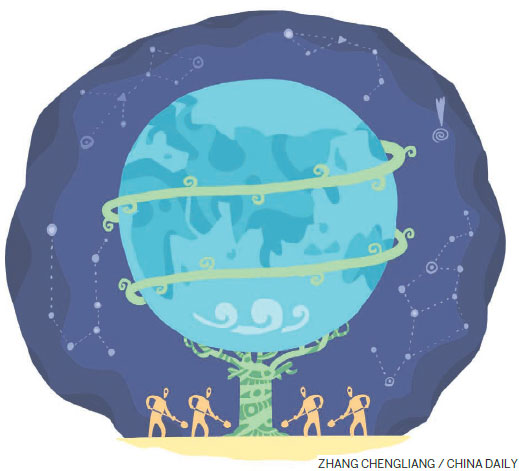
【China Daily】Wang Huiyao:Belt and Road needs global partners
China needs to take steps to enlist others and emphasize that the proposal is an exciting opportunity for the whole worldThe Belt and Road Forum for International Cooperation created a sense of exhilaration in Beijing. However, although the Belt and Road is pitched as a new approach to driving the momentum for globalization, much of the discourse is centered on China. Outside China, the initiative has encountered more doubters than believers. Skeptics perceive Beijing’s program as a grand vision without a practical plan, a largesse that China is handing out to its neighbors in exchange for geopolitical cooperation - or worse, a rising power’s intention to challenge the existing world order.As President Xi Jinping said in his keynote speech at the forum, the Belt and Road embodies "openness and inclusiveness, mutual learning and mutual benefit". The initiative needs not to be an agenda "by China for China", but "by China for the world". Indeed, if it fails to define itself as a global agenda that harnesses social and commercial, as well as political, forces around the world, these words will fall on the naysayers’ deaf ears. To achieve win-win cooperation, China must enlist global partners. The following 10 paths can help Beijing do just that.Incorporating the Belt and Road Initiative under the United Nations’ framework of governance. The Belt and Road is part of a UN resolution predicated upon the concept of "building a community of common destiny for mankind". It also aligns with the UN’s 2030 Agenda for Sustainable Development. There are more than 130 countries and international organizations participating in the Belt and Road. Coordination and concerted actions could be brought about by a Belt and Road-oriented agency established under the UN structure.Engaging the world’s major international institutions. To foster greater movement of goods, capital and people linked to the Belt and Road, rules and standards need to be streamlined. The World Trade Organization, the World Bank, the International Monetary Fund, the International Organization for Migration, and the International Labor Organization are among the partners that can help establish a regulatory framework for Belt and Road related issues.Stepping up efforts to win acceptance from both North and South. The Belt and Road needs not to be distinctively associated with China’s ancient history. Countries and international organizations, such as the United States, the European Union, Japan, South Korea, Russia and India, have all used the concept of a "Silk Road" in their own economic strategies. Beijing can find the common denominator among these plans. France, with its newly elected pro-globalization president, and the Commonwealth countries led by the United Kingdom are all poised to become Belt and Road partners. Great powers, advanced as well emerging economies, can all trek the Silk Road alongside China to make Belt and Road a global, rather than a China, project.Forging a Belt and Road business alliance with multinationals. Global giants such as Siemens and General Electric have already participated in the Belt and Road Initiative. Multinationals that have operations related to the Belt and Road can help Chinese companies navigate local situations with their experience and networks. Rising tides lift all boats. The infrastructure boom related to the Belt and Road Initiative provides opportunities for businesses around the world. A networking platform modeled after the B20 business summit could facilitate collaboration and partnerships among the Belt and Road business leaders.Pooling financial resources from across the globe for Belt and Road related projects.Infrastructure investments provide stable returns and institutional investors love them. There might be vast incentives concentrated in the world’s financial hubs, such as London, New York and Tokyo, for participating in the Belt and Road.Promoting cross-border e-commerce. The market size for global B2C is estimated to reach $1 trillion by 2020. With its drive to establish an Electronic World Trade Platform, Chinese e-commerce behemoth Alibaba is a leading champion for the globalization of digital retail. Amazon has a global logistics network that spans 185 countries and regions. It may join the ranks of e-commerce leaders linked to the Belt and Road as well. A digital Silk Road has room for more global players.Broadening international partnerships to foster people-to-people exchange. Tourism boasts enormous potential with more than 120 million Chinese overseas tourists spending $10 billion annually. The number of Chinese people travelling abroad could reach 700 million in the next five years. Education linked to the Belt and Road regions is not only a huge market, but will also help develop local workforces. Chinese and foreign universities as third-party partners should engage with the Belt and Road.Further reforming talent acquisition policies to foster global human capital flows. Overseas Chinese have traditionally played the role of driving investment and overseas expansion of Chinese businesses. In recent years, the Chinese government has eased the barriers to foreign talent migrating to China. The Belt and Road Initiative has a rapacious appetite for international talent across professional fields. There is a need to develop a multilateral mechanism for all Belt and Road partners to work together to address the talent shortage.Engaging global civil society linked to the Belt and Road. Given the rise of de-globalization sentiment worldwide, China should realize that the Belt and Road must be more attuned to grassroots voices to make sure that it benefits local communities. Think tanks, in their role of bridging the policymaking and academic worlds, are poised to become the primary agents of helping Beijing strengthen ties with nongovernmental organizations and other non-state actors and groups.A permanent secretariat. As China expands the Belt and Road orbit to include more countries and regions, an annual conference is not sufficient for all participating members to channel disputes and articulate concerns. It needs a permanent secretariat that can function as a platform for dialogue and communication at least, if not a multilateral negotiating mechanism.About Author Dr. Wang Huiyao is founder and president of the Center for China and Globalization(CCG), the largest social independent think tank in China, with over 100 researchers and members of staff.From China Daily, 2017-5-15
2017年5月22日 -
张蕴岭:一带一路,跨越千年的文明之路
张蕴岭,全球化智库(CCG)学术委员会委员、全国政协委员、中国社会科学院学部委员、国际研究学部主任、中国亚太学会会长 “丝绸之路”所代表的是一种精神,是中国与外部国家和平交往,实现互利共赢的象征。正如习近平主席所说的,“两千多年的交往历史证明,只要坚持团结互信、平等互利、包容互鉴、合作共赢,不同种族、不同信仰、不同文化背景的国家完全可以共享和平,共同发展”。 “一带一路”,即“丝绸之路经济带”和“21世纪海上丝绸之路”,是习近平主席2013年9月和10月在访问哈萨克斯坦与访问东盟国家时分别提出的倡议。2015年3月国务院授权国家发改委、外交部、商务部发布《推动共建丝绸之路经济带和21世纪海上丝绸之路的愿景与行动》文件,自此,“一带一路”建设正式启程,2016年“一带一路”建设进入实施阶段,取得了显著的成效。“一带一路”国际合作高峰论坛即将在中国召开,预计,“一带一路”的建设将会出现一个新的局面。显然,“一带一路”是中国想要干,决心干成的一件大事。“一带一路”是一个新生事物,不仅需要花大气力去推动,而且也需要花大功夫进行深入研究,提供出高水平的理论支持和可操作性的政策建议。 迄今,自“一带一路”倡议提出以后,国内外对其开展了热烈的讨论,进行了许多深入的研究,专家学者从不同的视角,提出了各种各样的观点,有共识,也有分歧。究竟如何来认识“一带一路”的内涵和意义呢?在我看来,它是中国扩大和深化对外开放,构建开放发展新格局,践行合作共赢理念的一个大战略,是做誓言走和平发展道路,做新型大国的大举措。因此,我们必须从大战略的高度来加以认识,从大区域和全球的视野来审视,从更长远的发展来进行规划和推进。 从发展的角度看,建设“丝绸之路经济带”是实现中国开放均衡格局的一个大战略。中国地域辽阔,既有沿海,也有内陆。中国的对外开放先是从沿海地区开始的,以推动沿海地区的开放发展为重点。通过引进外资,参与国际分工,大力发展外向型经济,扩大出口,实现了沿海地区的快速发展,但与此同时,国内东西地区间的发展差别拉大了。尽管制定了西部大开发战略,但沿海和内陆的开放发展环境还是有很大的差别,发展的水平和格局很不平衡。内陆地区,特别是西部地区的开放发展仍然受到诸多制约。建设内外联动的“丝绸之路经济带”有着全新的含义:一则,突破了内陆地区的对外开放的地缘制约,拓展了与外部链接新发展空间;二则,改变了以往注重引进和出口的开放方式,与相关国家实现联动发展,以共同发展来拓展发展的空间。建设“21世纪海上丝绸之路”着眼于深化沿海开放,建设海上合作发展带。海路是中国对外经济交往的主要通道,目前,中国大部分的货物进出口,资源、能源进口等都主要通过海路进行。通过合作共建,把海上通道建设与各国沿海的发展紧密结合起来,这样,就实现了海域基于发展的开放、安全与合作的新关系和新秩序。由此,通过路海建设联动,就可以形成一种开放、合作、安全与共利的新格局。 “丝绸之路”所代表的是一种精神,是中国与外部国家和平交往,实现互利共赢的象征。正如习近平主席所说的,“两千多年的交往历史证明,只要坚持团结互信、平等互利、包容互鉴、合作共赢,不同种族、不同信仰、不同文化背景的国家完全可以共享和平,共同发展”。同时,“一带一路”战略不是一项仅仅着眼于中国自身发展的战略,而是以中国的发展为契机,实现地区和世界和平发展的大谋略。通过推进“一带一路”的建设,可以扩大中国的对外开放,拓展发展的空间,加快实现发展的转型与升级,通过合作共建,让其他国家从中国的发展与合作中获得发展的新机遇和新动力。 中国有20多个陆上与海上邻国,共同构成宽阔的地缘区域。“一带一路”有着很强的区域性含义,是构建中国地缘和平发展战略依托带的一个战略性布局。中国一向把加强同周边国家的睦邻友好定为外交优先目标。“一带一路”建设标志着中国发展与周邻关系的一个重要新定位,即构建基于合作发展的利益共同体和命运共同体。改革开放以来,中国的经济得到快速发展,逐步成为周邻的主要市场,为各国提供的发展利益不断增大。但是,周邻多数地区都还欠发达,这些地区国家的发展愿望强烈,因此,开展发展合作是中国深化与周邻国家外交的最大公约数。“一带一路”建设的实施,有助于培育利益和命运共同体意识和精神,有助于打造共同发展的区域,增进共同利益,有助于增加彼此之间的信任,从而有助于改善相互间的关系。这样,中国不仅使自身获得了更大的发展空间,也有了宽阔的地缘区域作为依托。“一带一路”是一种跨区域的开放性大框架,有很长的延伸和拓展空间,从亚洲到欧洲,到非洲,不需要画定线图,建设进程是动态发展的,内容是不断进行调整和丰富的。 传统的丝绸之路,起自中国古代都城长安,经中亚国家、阿富汗、伊朗、伊拉克、叙利亚等达地中海,到罗马。这条路被认为是连接亚欧大陆的古代东西方文明的交汇之路。与今天比起来,那时的贸易和人员流动量较小,如今则不同,经济带建设涉及路上、空中交通网络建设,涉及扎地生根的产业链构造,涉及人文的交流,特别是涉及各国发展战略的接轨。 秦汉时期兴起的海上丝绸之路,在历史延伸中不断拓展为交通贸易的黄金路线。这条海道自中国东南沿海,穿过南中国海,进入印度洋、波斯湾,远及东非、欧洲,成为沟通全球文明的一个重要走廊。不过,随着近代中国的衰落,海上通道长期堵塞。如今,中国已经是一个海运大国,航运通往世界。建设“21世纪海上丝绸之路”,不仅是航道建设,而且是沿海经济发展网建设,通过构建航运网络,发展沿海经济园区,构建起互联互通的海上经济发展带。 中国不仅提出“一带一路”倡议,还提出其他许多新倡议和新举措,它们之间相辅相成,体现中国的大国战略与大国外交。像上海合作组织及其推动的安全与经济发展合作议程,金砖国家合作机制以及它旗下的“新发展银行”,亚洲基础设施开发银行(亚投行),单独设立的“丝路基金”,以及亚太经合组织(APEC)框架下的互联互通、亚太自贸区,等等,都体现着中国的新理念、新作为。 总括起来,首先,它们体现了中国的“新型大国观”。中国已经崛起成为大国,向强国迈进。世界都很关注,中国成为大国、强国会干什么?尽管中国一再宣示,坚持走和平发展的道路,不走传统大国崛起争霸、称霸的老路,但怀疑者不少。产生怀疑也不难理解,哪有一个大国会和平崛起,不搞扩张的?“一带一路”倡议是一个明确的答案,因为所倡导和推动的是开放、合作、发展与和平,而不是扩张、争霸或殖民。再则,它们体现了中国的“新型合作发展观”。开放发展是一个大趋势,但事实表明,光有开放不行,还需要合作。合作发展不同于传统的援助,它所提倡和推动的是共同参与,共同建设,共享成果,“一带一路”的倡议就是要把中国发展的能动性与外部世界发展的需要连接起来,把各国的国内规划与外部的建设连接起来,把本国资源能力与国际融资支持连接起来,在“一带一路”这个大平台上实现共谋发展,共同建设和共享红利。还有,它们体现的是中国的“新海洋秩序观”。 “一带一路”战略的实施是一长期过程,需要几十年,甚至更长的时间,需要数代人坚持不懈的努力。建设要从现在开始,从基础做起,发展要着眼于长远,先易后难,有共识者先行。“一带一路”建设涉及广泛的领域,要实现的是多方面的互通,具有经济、政治、文化、安全、宗教等综合的意义。为此,“一带一路”的建设要取得成功,需要动员所有参与者的积极性,包括各国际组织、区域组织的积极性,大家一起共同设计、共同参与、共同建设,使中国的倡议成为大家的共识和行动。在建设中,在参与上有竞争,在建设上需要合作。显而易见的是,要让如此大的地区通过现代基础设施连接起来,实现共同的发展,让各国人民共享和平发展的成果,是一件很不容易的事情,说起来容易,形成共识不易;做政治表态容易,真干起来不易;推动一阵子容易,长久坚持做下来不易。在推进和建设进程中,既有风险,也有障碍,正因为如此,需要坚持不懈,需要知难而进。 “一带一路”提出了一个大思路,提供了一个大平台。关键是干起来,干起来必有成果,而坚持下去必有大成效。“风物长宜放眼量”,“一带一路”建设不能只看眼前,更要看长远,不能只盯着一时一事,更要观大局,没有大视野,缺乏意志力,干不成这样的大事业。文章选自《中国纪检察报》,2017年5月12日
2017年5月22日 -
王辉耀:有效推进区域和全球贸易投资自由化便利化
文 | 全球化智库(CCG)理事长王辉耀 5月14日,“一带一路”国际合作高峰论坛高级别会议“推进贸易畅通”平行会议在北京举行。会议通过了《推进“一带一路”贸易畅通合作倡议》(以下简称《倡议》),就大力提升经济全球化、深化贸易投资自由化和便利化达成共识,并就促进贸易增长、振兴相互投资、促进包容可持续发展提出实施方案。 当前,世界各国迫切需要解决全球经济增长动能不足、治理滞后、发展失衡的突出矛盾,“一带一路”倡议正是建设更有活力、更加包容、更可持续新型全球化所迫切需要的有效推进方案。经过4年的发展,“一带一路”已经进入到构建国际共识、打造国际平台、建设国际治理体系实施的新阶段。此次国际合作高峰论坛将“一带一路”提上全球议事日程,从中国的倡议变成全球的倡议,从中国项目变成世界项目,就“一带一路”倡议的循序发展形成更多建议与共识,提出相应的规划和机制。《倡议》正是其中针对贸易和投资领域的重要组成部分,具体来看有以下值得关注的成果: 首先,中方为推进贸易畅通合作提出了一系列具体举措,包括继续扩大市场开放、实施积极进口政策、举办国际进口博览会、商建自由贸易区、加大对沿线国家和地区的投资、帮助沿线国家加强经贸及投资人才能力建设等。这些具体举措通过开放共赢的合作模式,切实保证了“一带一路”沿线国家和地区能够共享经济全球化的红利,充分展示了中国带动世界经济共同发展的责任担当。可以说,正是以“一带一路”倡议的提出为标志,中国进入经济全球化的崭新阶段。我们通过实施更加积极主动、互利共赢的开放战略,发展更高层次的开放型经济,更加深入地参与到全球经济治理中,成为新一轮经济全球化的重要动力。 同时,《倡议》强调,各方重申支持以世界贸易组织为基石的多边贸易体制,并将加强“一带一路”倡议与其他倡议和计划的对接与合作,这充分说明了“一带一路”并不是中国独自“另起炉灶”,而是要坚定维护现有多边机制,并协同各个国家、地区以及国际组织,共同推进全球经济治理机制的不断完善。而且,“一带一路”倡议与联合国的相关倡议和计划目标一致,有广泛的合作空间,加强对接有助于各个国家和地区更加充分地参与进来。 此外,《倡议》还着重强调了发展新业态、促进服务贸易合作、探索创新投资合作模式、加大区域价值链投资等具体举措,这些都将极大地推动“一带一路”沿线的贸易与投资合作,加快产业链条的完善升级,重塑沿线商业格局,帮助沿线国家、地区和百姓真正从经济全球化中获益。 《倡议》是为推动区域和全球贸易与投资发展作出的积极努力。我们相信,各个国家、地区、国际组织、企业、专业人士等不同主体都能充分地参与到“一带一路”建设中来,共享共建共赢,共同唱响这首全球化大融合大发展的大合唱。文章选自中国经济网,2017年5月19日
2017年5月22日 -
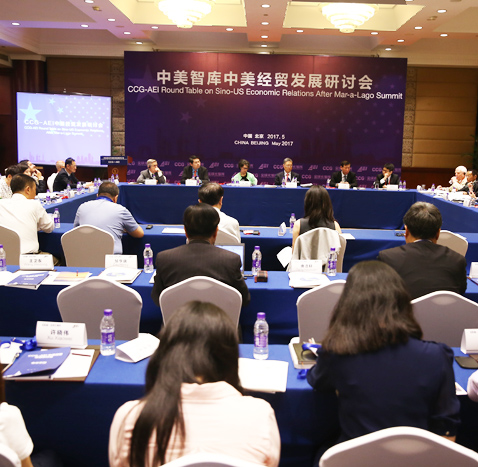
【Xinhua】China, US think tanks hold seminar on bilateral trade relations
BEIJING,May 19 (Xinhua) -- Analysts from China and the United States participated in a seminar discussing Sino-US relations and bilateral trade in Beijing from Thursday. The two-day seminar, "China-U.S. Future Trade Relations after Mar-a-Lago Summit", was jointly organized by the Center for China and Globalization(CCG) and American Enterprise Institute (AEI). The two countries recorded 500 billion U.S. dollars in bilateral trade volume in 2016, and are expected to increase trade corporation under 100-day action plan, said Jiang Shan from CCG. The action plan, launched between China and the United States in April, has already received initial results in agriculture, energy, financial services and investment. Under the plan, China will allow imports of U.S. beef and the United States will import poultry from China. The United States expects China and other partners to import liquefied natural gas and China will allow wholly foreign-funded financial services to provide credit ratings in China. Derek Scissors from AEI believes that the two major powers have great potential in deepening economic and trade cooperations, for example, the development of energy sector in the United States will attract more investment from Chinese enterprises. He Yafei, co-chairman of CCG and former vice minister of foreign affairs said that cooperation is the only correct choice for both countries. "With more than 40 years of experience in diplomatic work, I’m confident to say that China will continue the path of peaceful development," said He."China will also pursue its development within the existing international system." In addition, he said China will work on promoting the democratization of international relations, so that developing countries and emerging markets worldwide can have a bigger say in global rule setting and decision making. "China and the United States do have responsibilities to maintain stability and promote global economic growth," said He. "It is important for us to exchange views and provide policy recommendations for the two governments that will influence the future of the two countries."From Xinhua,2017-5-19
2017年5月22日 -
张燕生:“一带一路”带来了全球的需求和动力
专家简介张燕生,全球化智库(CCG)学术委员会专家,国家发改委学术委员会秘书长。 2014年至2016年,中国同“一带一路”沿线国家贸易总额超过3万亿美元,中国对“一带一路”沿线国家投资累计超过500亿美元,中国企业已经在20多个国家建设了56个经贸合作区,为有关国家创造近11亿美元税收和18万个就业岗位。 过去四年,“一带一路”取得了丰硕的成就。日前,中国国际经济交流中心首席研究员张燕生接受《中国经营报》记者采访时表示,“一带一路”对中国和沿线各国带来的最大好处就是:全球没有需求,“一带一路”带来了需求,全球没有动力,“一带一路”带来了动力。全球产能严重过剩,“一带一路”短缺;全球流动性严重过剩,“一带一路”短缺;全球经济福利严重过剩,“一带一路”短缺。因此,“一带一路”就是把全球过剩的产能、全球过剩的流行性、全球过剩的经济福利转移到“一带一路”。按总书记的话讲,本质上是通过提高有效供给来催生新的需求,实现世界经济再平衡。 “‘一带一路’覆盖44亿人口,有23万亿美元的GDP,“一带一路”的五通:即政策沟通、设施联通、贸易畅通、资金融通、民心相通,“一带一路”这一部分的经济、就业和税收发展起来,对于美欧可以共同开拓第三方市场,共同走“一带一路”,对于全球来讲,增加了一个大的新动力,有利于全球公平、创新、发展。”张燕生说。 面对一带一路的争议和疑虑,张燕生称,“一带一路”是否要争霸世界,搞新殖民主义,总书记讲到,中国在历史上长期是世界上最强大、最强盛的国家,但是中国在世界上就没有留下殖民和侵略他国的历史。从这个角度来讲,用行动证明我们不是像老殖民主义那样用炮舰去殖民掠夺别人,我们是给对方送贸易、送电、送投资、送产业合作,而且我们送来的东西能够对当地年轻人、妇女、小企业带来公平,以及分享“一带一路”成果的机会,而且我们“一带一路”是和平之路,繁荣之路、创新之路、开放之路和文明之路,也会沿着这条路走下去。 接下来一带一路有没有明确的方向,张燕生对记者表示,“一带一路”明确给思路基金增加一千亿人民币的注资,给开行和进出口行分别两千五百亿和一千三百亿人民币的专项贷款的注资,“一带一路”的援助方600亿人民币的注资,粮食特别援助20亿注资,南南合作20亿美金的注资等等,这些注资是“一带一路”从意愿变成现实,理念变成行动。接下来,对于“一带一路”新的发展阶段,正如习总讲的“钉钉子”的精神,一个钉子一个钉子的砸下去,推动下去,只要坚持下去,就会给世界一个惊喜,改变世界、改变中国、改变“一带一路”沿线各国经济社会发展的状况。文章选自中国经营网,2017年5月19日
2017年5月22日